
Intensive Care Medicine
Modern intensive care medicine involves more than just stabilizing life-threatening conditions. The goal is to treat patients safely while allowing them to participate as actively as possible in their recovery process.
Intensive Care Medicine
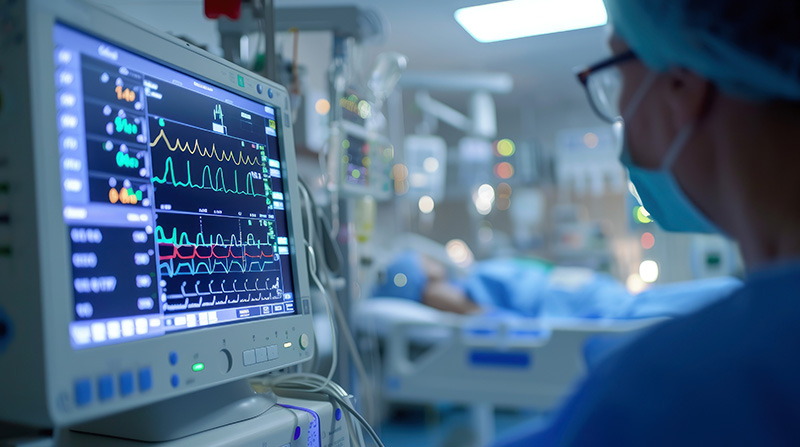
Intensive care medicine focuses on the treatment and monitoring of critically ill patients who require intensive medical care due to acute, life-threatening illnesses or complications.
Important aspects of critical care include the following:
- Safe sedation (targeted calming and reduction of consciousness and perception) and reduction of anxiety to minimize stress for patients and make an appropriate medical assessment possible
- Identification and treatment of disorders affecting consciousness and awareness, such as due to delirium, metabolic causes (metabolic disorders), or medication-induced effects
- Individualized treatment tailored to factors such as age, comorbidities, organ function, and ventilator settings
- Close collaboration among various medical disciplines to ensure rapid decisions that are appropriate in the circumstances
An important principle of modern intensive care medicine is that patients should remain awake as much as possible and be sedated only as far as medically necessary.
The guiding principle of the current S3 guideline (scientifically based recommendations for clinical practice issued by medical societies) is:
“Patients receiving intensive care should be awake, alert, and free from pain, anxiety, and delirium to allow them to actively participate in their own treatment and recovery.”
Using the lightest possible sedation can help enable patients to be actively involved in their own recovery process at an early stage. At the same time, this approach can reduce the potential consequences of unnecessarily deep sedation, such as the onset of delirium.
Our Contribution to Intensive Care Medicine
Dr. Franz Köhler Chemie GmbH has been developing and manufacturing pharmaceuticals for various applications in intensive care medicine for many years. Our products support healthcare professionals in caring for critically ill patients in a variety of clinical situations.
For more information about our products for intensive care, please visit the corresponding product pages.